Posted on 10/19/2026
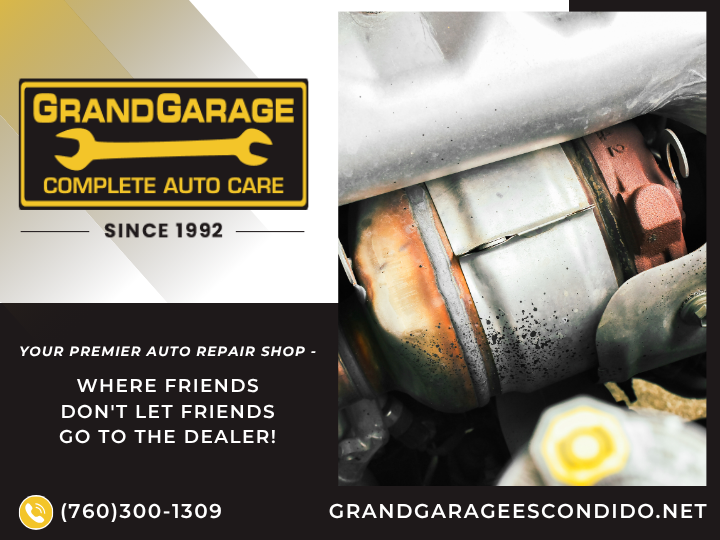
Catalytic Converter Replacement Cost Near Escondido, CA: Why Professional Repair Can Cost Less Than Doing It Twice When drivers search for catalytic converter replacement cost near Escondido, CA, they are usually trying to answer an urgent question: What will it take to get the vehicle repaired and back on the road? Catalytic converter replacement can be a substantial repair, but the converter itself is only part of the situation. Before replacing it, a technician must determine whether the converter has actually failed, what caused it to fail, whether another engine or exhaust problem must be corrected first, and which replacement converter is legally and mechanically correct for that vehicle. Skipping those steps may lower the first estimate, but it can dramatically increase the total cost of solving the problem. A converter can be replaced and then fail again because an engine misfire was never repaired. A check engine light can return because the real problem was an exhaust lea ... read more
Posted on 7/21/2026
Transmission Repair vs. Replacement in Escondido, California: Why Getting It Right the First Time Matters More Than You Think Few vehicle problems create as much anxiety as transmission trouble. It is one of the most complex systems in your car, and when something goes wrong, most drivers are left with more questions than answers. Should it be repaired? Does it need to be rebuilt? Is replacement the only real option? And perhaps the most important question of all: how do you know you are getting an honest answer instead of a guess dressed up as a diagnosis? This is where the real cost of transmission problems is decided. Not in the parts. Not in the labor. In the accuracy of the very first diagnosis. A transmission issue handled correctly the first time can mean a straightforward, contained repair. The same issue handled with a guess, a shortcut, or an incomplete diagnostic process can spiral into a much larger, more expensive, more frustrating experience, often requiring the work to ... read more
Posted on 7/17/2026
The Used Car You Almost Bought: Why an Inspection Beforehand Is Worth More Than Every Repair Afterward There's a particular kind of quiet that fills a car when the driver realizes they made a mistake. It usually shows up around week three. The excitement has burned off. The satisfaction of driving something new-to-you has thinned out. And now there's a sound — a tick, a shudder, a hesitation when the transmission reaches for third gear — that wasn't there during the test drive. Or maybe it was, and it got explained away. That's just how these run. It'll smooth out once you put some miles on it. Every used car makes a little noise. The quiet comes when the driver stops believing that explanation. If you're reading this, you're probably somewhere before that moment. You're looking at a used vehicle. Maybe it's a private listing that photographs suspiciously well. Maybe it's a trade-in sitting on a lot with fresh tire shine and a vac ... read more
Posted on 6/15/2026

What Do I Do Now That Summer Is Here With My Car in Escondido, CA? Summer puts a different kind of demand on your vehicle. The weather gets hotter. Roads hold more heat. Traffic feels heavier. The air conditioning runs almost every time you drive. Tires deal with hot pavement. Batteries are stressed by heat. Cooling systems work harder. Brakes, fluids, belts, hoses, and suspension parts all have to perform under added pressure. For drivers in Escondido, CA, summer car care is not just about comfort. It is about safety, reliability, and avoiding problems before they leave you stuck on the side of the road. Whether you are driving around Escondido, heading toward San Marcos, commuting through Vista, visiting Poway, going into Rancho Bernardo, driving toward Valley Center, or taking a summer trip across Southern California, your vehicle needs to be ready. The big question is simple: What do I do now that summer is here with my car? The answer is not to panic. It is not to replace e ... read more
Posted on 6/8/2026
Car Repair Near Me: How to Find a Shop That Truly Has Your Best Interest at Heart When people search for car repair near me, they are usually not just looking for the nearest repair shop. They are looking for trust. They are looking for honesty. They are looking for a place that will help them understand what is happening with their vehicle, what matters most right now, and how to make wise decisions for the long term. That is what really matters. Your vehicle affects nearly every part of your daily life. It gets you to work, carries your family, keeps your schedule moving, and gives you the freedom to handle what life requires. When your vehicle is not dependable, life gets more complicated fast. When a repair experience is confusing, rushed, or pressure-filled, it only adds more stress to a situation that is already frustrating. That is why the real question is not just, “Where is the best car repair near me?” The better question is, “Who will actually help me ... read more
Posted on 6/5/2026
When Your Vehicle's Electrical System Starts Behaving Strangely, the Answer Is Never a Guess There is a specific kind of frustration that comes with an automotive electrical problem — and it is different from almost every other kind of vehicle trouble a driver encounters. A flat tire is immediate and obvious. A squealing brake is hard to ignore. But an electrical fault? It flickers. It hides. It works perfectly on the drive to the shop and disappears the moment a technician looks at it. It produces warning lights that seem unrelated to anything you can feel or hear. It drains your battery overnight and then starts your car without hesitation the next three mornings in a row. This is the nature of modern automotive electrical problems, and it is why they are consistently among the most misdiagnosed, most mishandled, and most frustrating issues in all of vehicle repair. It is also why the shop you choose for electrical work matters more than it does for almost any other categ ... read more
Posted on 5/22/2026
Car Wiring Repair Near Me: Why Electrical Problems Need Proper Testing and Clear Answers When someone searches for car wiring repair near me, they are usually dealing with a problem that has moved beyond a small annoyance. Maybe the car will not start every time. Maybe the battery keeps dying. Maybe the dashboard lights flicker. Maybe the headlights act strange at night. Maybe a fuse keeps blowing. Maybe the power windows, locks, mirrors, wipers, radio, or climate controls stop working. Maybe a warning light comes on, disappears, and then comes back again. Electrical problems are frustrating because they are not always easy to see. A worn tire can be measured. A leaking hose may leave fluid behind. A brake noise can be heard. But a wiring problem can hide behind the dashboard, under the hood, inside a door, near a fuse box, beneath a seat, along the frame, inside a connector, or deep inside a wiring harness. Modern vehicles depend on electrical communication ... read more
Posted on 5/11/2026
Why ASE Certified Technicians Matter When Choosing an Auto Repair Shop When a customer brings a vehicle into an auto repair shop, they are not just asking for a repair. They are trusting someone with their safety, transportation, schedule, family, and peace of mind. They want to know the person inspecting the vehicle understands what they are looking at. They want to know the recommendation is based on real findings. They want to know the repair is being handled by someone qualified, trained, and committed to doing the job correctly. That is why ASE certified technicians matter. Most drivers do not want to become automotive experts. They do not want to diagnose warning lights, research every possible cause of a noise, or wonder whether a repair recommendation is accurate. They want a repair shop they can trust to inspect the vehicle properly, explain what is happening clearly, and help them make a good decision. A customer should not have to guess whether the technician knows what ... read more
Posted on 4/22/2026
Top Causes of a Check Engine Light (And How We Narrow It Down) When your check engine light turns on, it is easy to feel uncertain. You may ask yourself: Is this serious? Can I keep driving? Is this a quick fix or something deeper? The most important thing to know is this: the check engine light is a warning, not a full diagnosis. It means your vehicle detected a condition outside normal range. It does not automatically tell you the root cause. That is why the right approach is a complete diagnostic process built around one principle: truly having the customer’s best interest at heart. That means no guessing, no parts swapping, and no pressure—just clear testing, accurate answers, and practical guidance. If you drive in Escondido, San Marcos, Valley Center, Rancho Bernardo, Poway, Vista, Hidden Meadows, or nearby North County communities, this guide will walk you through the top causes of a check engine light and how we narrow the issue down correctly. ... read more
Posted on 4/20/2026

The Shop Your Vehicle Has Been Waiting For — Full-Service Auto Repair Built on Honesty and Expertise There is a version of vehicle ownership that most drivers never fully experience — not because it is out of reach, but because finding the right shop to make it possible requires knowing what to look for, what questions to ask, and what standard of care is actually available when a shop is genuinely committed to the people it serves. That version of ownership looks like this: your vehicle runs reliably, predictably, and well. When something needs attention, you find out early — before it becomes expensive, before it becomes an emergency, and before it puts you on the side of a road wondering what went wrong and why no one caught it sooner. When you receive a recommendation from your service advisor, you do not spend the drive home wondering whether it was necessary or whether you were just sold something. You know it was necessary because the shop you trust has spent ... read more